
Luxury in Porto for Million-Dollar Pockets and Money Laundering

Za Tivat Jaz Kinezima 2,3 miliona
19 Aprila, 2026
Luksuz u Portu za “milionski džep”
20 Aprila, 2026Luxury in Porto for Million-Dollar Pockets and Money Laundering
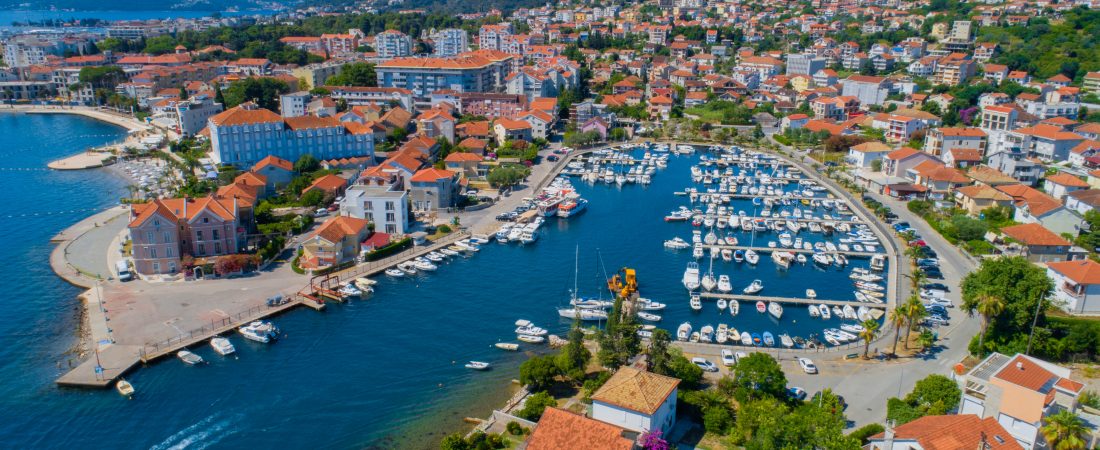
Real estate in the luxury resort of Porto Montenegro, which the former government led by the Democratic Party of Socialists (DPS) has presented as one of its privatization success stories, is accessible only to companies and individuals with million-dollar-deep pockets. There have also been cases of apartment seizures due to suspicions that the properties were acquired through criminal activities.
The Action for Social Justice (ASJ) has analyzed the prices contained in several contracts (which it has in its possession) for the purchase of apartments in certain residential units within Porto Montenegro. The findings indicate that luxury properties in this prestigious location are affordable only to the very wealthy, lending support to numerous public claims that the privatization of this prime waterfront site—located virtually on the “edge of the sea”—has ultimately resulted in the creation of a tourist haven for affluent clientele.
Thus, one of the examples of sales contracts in ASJ's possession shows that the company Accelerator Global, whose real owner is hidden behind a company registered in an off shore zone, in 2013 contracted the purchase of a 158-square-meter apartment in one of the residential buildings in Porto Montenegro for a gross price of 1.3 million euros.
After the purchase price was paid, ownership of the apartment was registered in the name of the company in 2019. However, a year later, the apartment was sold for €1.5 million to businessman Veselin Pejović from Nikšić, with payment to be made in ten installments. Pejović was registered as the owner in September 2022, and already in the following month he transferred the apartment to Dubravka Pejović through a gift agreement (according to previously available information, she is his wife).
The fact that the prices of luxury residential units in Porto Montenegro are truly “luxury-level” is illustrated by the example of a duplex apartment of just over 400 square meters (including garage and ancillary non-residential space), which was purchased in 2024 by the Sarajevo-based company Avaz Roto Press. According to the contract, the purchase price amounted to approximately €3.1 million, plus VAT. Based on publicly available information, ownership of this company has been linked to Fahrudin Radončić.
One example of an apartment transaction from 2020 shows that company “Blue Palm”, which had been established a year earlier by a company headquartered in the Dubai Central Free Zone, entered into an agreement to purchase a residential unit of approximately 100 square meters (including garage space) for a price of about €530,000, plus VAT. The registration of the property in the buyer’s name was completed two years later.
Another example of an apartment transaction from 2022 involves the Podgorica-based company “Gufo”, which purchased two apartments, each measuring approximately 150 square meters (together with garage space and approximately three square meters of ancillary non-residential space per apartment). The purchase price of each apartment was approximately €862,000, plus VAT. That same year, the company was mentioned in media reports as having offered guarantees for the bail of Petar Lazović, who had been arrested.
Some examples of real estate purchases in Porto Montenegro indicate that certain properties have been placed under a prohibition on disposal due to suspicions that they were acquired using proceeds derived from criminal activities. One such example involves a duplex apartment of approximately 450 square meters (including garages), purchased by “Vis Investment”, which is currently subject to such a restriction. The purchase agreement for this residential unit dates back to 2018 and was valued at more than €2.8 million, plus VAT.
Some examples also show that previously imposed restrictions on the disposal of certain properties have since been removed. Such is the case of Israeli national Majkl David Grinfild and related companies, against whom restrictions had previously been imposed due to suspicions of money laundering. The name is reported to be a false identity used by the Israeli national, who, in Israel, admitted guilt to charges of fraud, forgery, and money laundering.
The examples of purchase agreements in the possession of the ASJ also show that VAT is specified as being subject to changes in accordance with applicable regulations. Interestingly, the contracts contain a provision stipulating that, in the event of contract termination, the penalty amounts to 25 percent of the total purchase price.
It is often pointed out in public discourse that the luxury resort of Porto Montenegro has enabled Montenegro to compete, as a tourist destination, with some of Europe’s most prestigious tourism zones. However, the average Montenegrin citizen will, in all likelihood, never have the opportunity in their lifetime to enjoy a cup of coffee on one of the luxury restaurant terraces within this area, while purchasing a property at this location remains nothing more than a distant dream.
Some residents of Tivat interviewed by the ASJ believe that Porto Montenegro has undoubtedly brought significant value to the town. However, they also argue that it has substantially increased the everyday cost of living for local residents in this coastal municipality.
Today, the Porto Montenegro project is backed by capital from the United Arab Emirates.
ASJ has repeatedly pointed out that the original foreign investor dictated key conditions for investing in the site. One of those conditions was a preferential tax regime for the yachting tourism sector. As a result, the state has so far forgone €104 million in revenue through fuel-tax exemptions granted to yachts. That was direct preferential treatment for the investor, while some of the investor’s other demands at the time—particularly those related to leasing arrangements—lacked a legal basis.
The sale of the assets of the once-renowned Tivat company specializing in the overhaul and repair of military vessels, located on an exceptionally attractive site, together with the granting of a multi-decade lease over the maritime area and part of the coastal public domain, represented one of the first hybrid privatization models implemented by the former Government of Montenegro.
The tender offered only the sale of the company’s assets located on land and along the coastline. However, the selected buyer was also granted the right to lease the coastal public domain area for a period of as long as 90 years.
During the initial years of the investment, the foreign owner increased the company’s share capital through loan agreements with its affiliated companies. These transactions were not subject to any tax payment obligations. The tourism project subsequently changed ownership in 2015.
Through the relocation of the company’s headquarters from one European country to another, and the establishment of a subsidiary company to which Porto Montenegro was first sold and then resold, the strategic investor of the Government of Montenegro managed to avoid the application of Montenegrin tax laws concerning the payment of capital gains tax, as previously reported by the ASJ.
As a result, the state could have collected approximately €8.7 million in revenue. However, the former owner took advantage of tax benefits available under the jurisdiction of Malta, as well as the double taxation avoidance agreement concluded between Montenegro and Malta.
Action for Social Justice
Ines Mrdovic